Salmon was the first protein I ever felt confident cooking. It is forgiving, it cooks quickly, and when you treat it well it rewards you with rich flavor and tender, flaky texture. This sticky honey garlic version has become my weeknight go-to — it tastes like something you would order at a great Asian fusion spot, but it comes together in less time than it takes to cook a pot of rice.
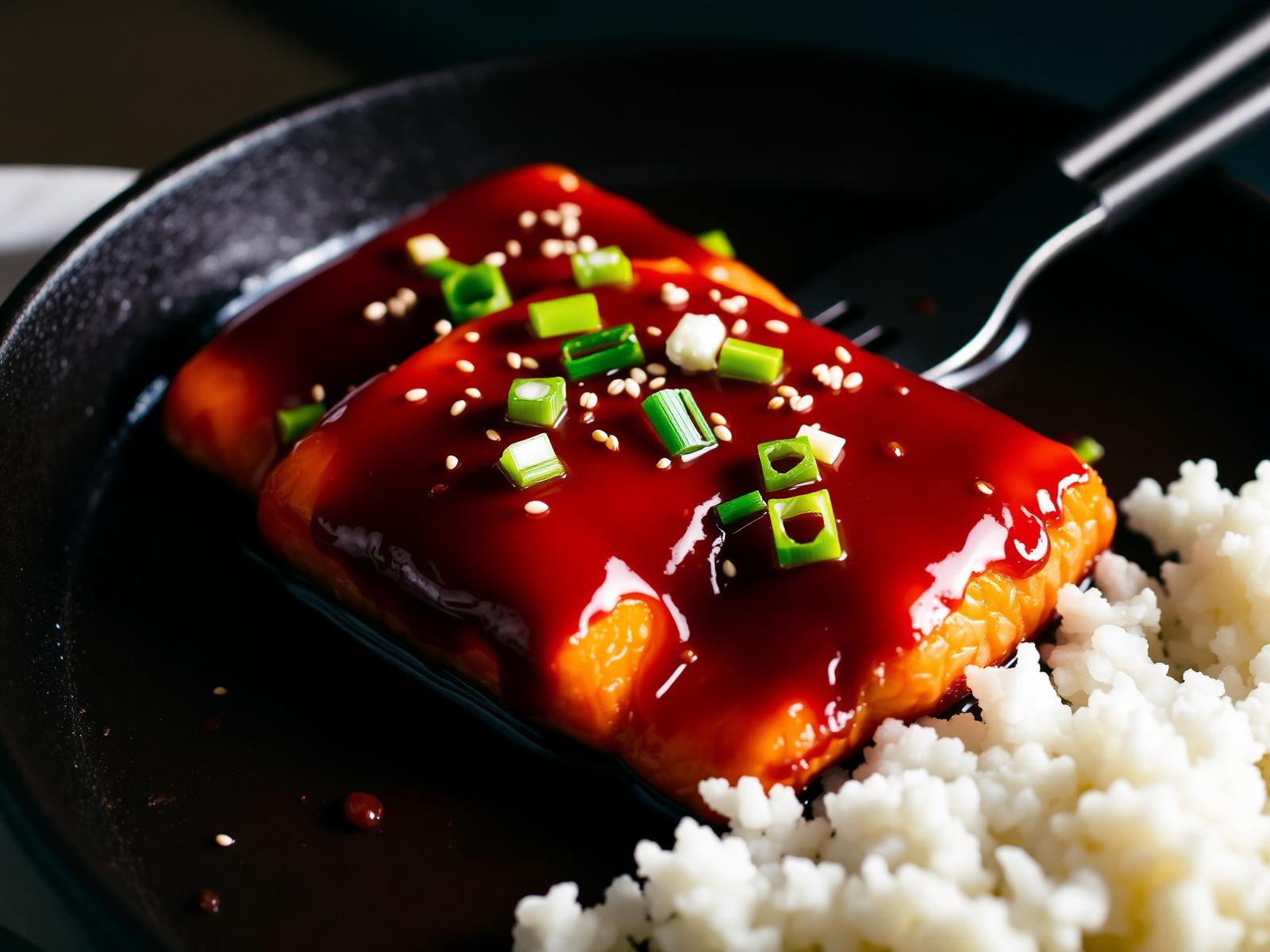
The sauce is the star: a glossy, sweet-savory glaze built from honey, soy sauce, garlic, ginger, and a splash of rice vinegar for brightness. As it reduces in the pan, it thickens and clings to the salmon, basting the fillets in caramelized flavor with each spoonful. A little chili crisp at the end adds gentle heat and a satisfying crunch, but it is optional — the dish is wonderful without.
I prefer skin-on fillets because the skin protects the delicate flesh from overcooking and crisps up into a luxurious bite of its own. But skinless works perfectly too — just shorten the searing time slightly. Either way, the cooking method is the same: hot pan, quick sear, glossy glaze, served immediately.
Why you'll love it
- Restaurant-quality flavor in under 20 minutes
- One pan, six pantry ingredients for the sauce
- High in protein and omega-3s
- Pairs with anything: rice, noodles, greens, or roasted veggies
"Salmon was the first protein I ever felt confident cooking."
Ingredients
Serves 4
For the salmon
- 4 (6-oz / 170 g) salmon fillets, skin-on if possible
- 1 tbsp neutral oil (avocado or grapeseed)
- 1/2 tsp kosher salt
- 1/4 tsp freshly ground black pepper
For the honey garlic sauce
- 1/3 cup honey
- 1/4 cup low-sodium soy sauce
- 2 tbsp rice vinegar
- 6 cloves garlic, finely minced
- 1 tbsp fresh ginger, finely grated
- 1/2 tsp toasted sesame oil
- 1 tsp cornstarch + 1 tbsp cold water (slurry)
For serving
- 2 tsp toasted sesame seeds
- 2 scallions, thinly sliced
- Lime wedges
- Steamed jasmine rice
Instructions
5 steps · 17 min total
- 01
Whisk the sauce
In a small bowl, whisk together the honey, soy sauce, rice vinegar, minced garlic, grated ginger, and sesame oil until uniform. In a separate small bowl, stir the cornstarch and cold water into a smooth slurry. Set both aside near the stove.
- 02
Dry and season the salmon
Pat the salmon fillets dry with paper towels — really dry, especially the skin. Wet fish steams instead of searing. Season both sides with salt and pepper. Dry skin is the difference between flabby and crispy.
- 03
Sear the salmon
Heat the oil in a large nonstick or cast-iron skillet over medium-high heat until shimmering. Add the salmon skin-side down. Sear undisturbed for 4 to 5 minutes until the skin is deeply golden and crisp. Flip carefully and cook another 2 to 3 minutes for medium. Transfer to a plate.
- 04
Build the glaze
Reduce the heat to medium. Pour the sauce mixture into the same skillet — be careful, it will sputter. Simmer for 1 minute, then stir in the cornstarch slurry. Continue stirring as the sauce bubbles and thickens into a glossy glaze, about 1 minute more.
- 05
Glaze and serve
Return the salmon to the skillet, skin-side up, and spoon the sauce generously over each fillet. Let the salmon warm in the glaze for 30 seconds. Plate over rice, drizzle with extra sauce, scatter with sesame seeds and scallions, and serve with lime wedges.
Chef's tips
Small details that change the outcome
Pat the salmon completely dry before searing. Any surface moisture prevents the skin from crisping.
Don't move the salmon while the skin sears. Patience gives you that shattering, golden skin.
Use low-sodium soy sauce. Regular soy plus honey can push the sauce into too-salty territory.
If the glaze thickens too much, splash in a tablespoon of water. If too thin, simmer 30 seconds longer.
Storage & reheating
Refrigerate leftover salmon in an airtight container for up to 2 days. The glaze keeps the flesh from drying out. Reheat gently in a covered pan over low heat with a splash of water, or flake cold leftovers over a salad or rice bowl for a beautiful next-day lunch.
Frequently asked
Answers to the most common questions
Can I use frozen salmon?+
Yes — thaw it completely in the fridge overnight, then pat very dry with paper towels. Frozen salmon releases more moisture, so the drying step matters even more.
What can I serve with this?+
Jasmine or basmati rice, soba noodles, steamed bok choy, roasted broccoli, or a simple cucumber salad. Anything that can soak up the extra glaze.
How do I know when salmon is done?+
The flesh should flake easily when pressed with a fork but still look just barely translucent in the center. An instant-read thermometer should register 125°F for medium. It continues to cook for a minute after coming off the heat.
Can I bake instead of pan-sear?+
Yes — bake at 400°F for 10 to 12 minutes, then brush with the glaze (reduced separately on the stove) for the last 2 minutes under the broiler. The skin won't be quite as crispy, but the flavor is just as good.

Written by
GreenFork Kitchen
Tested in a real home kitchen — three times before publishing, every time.