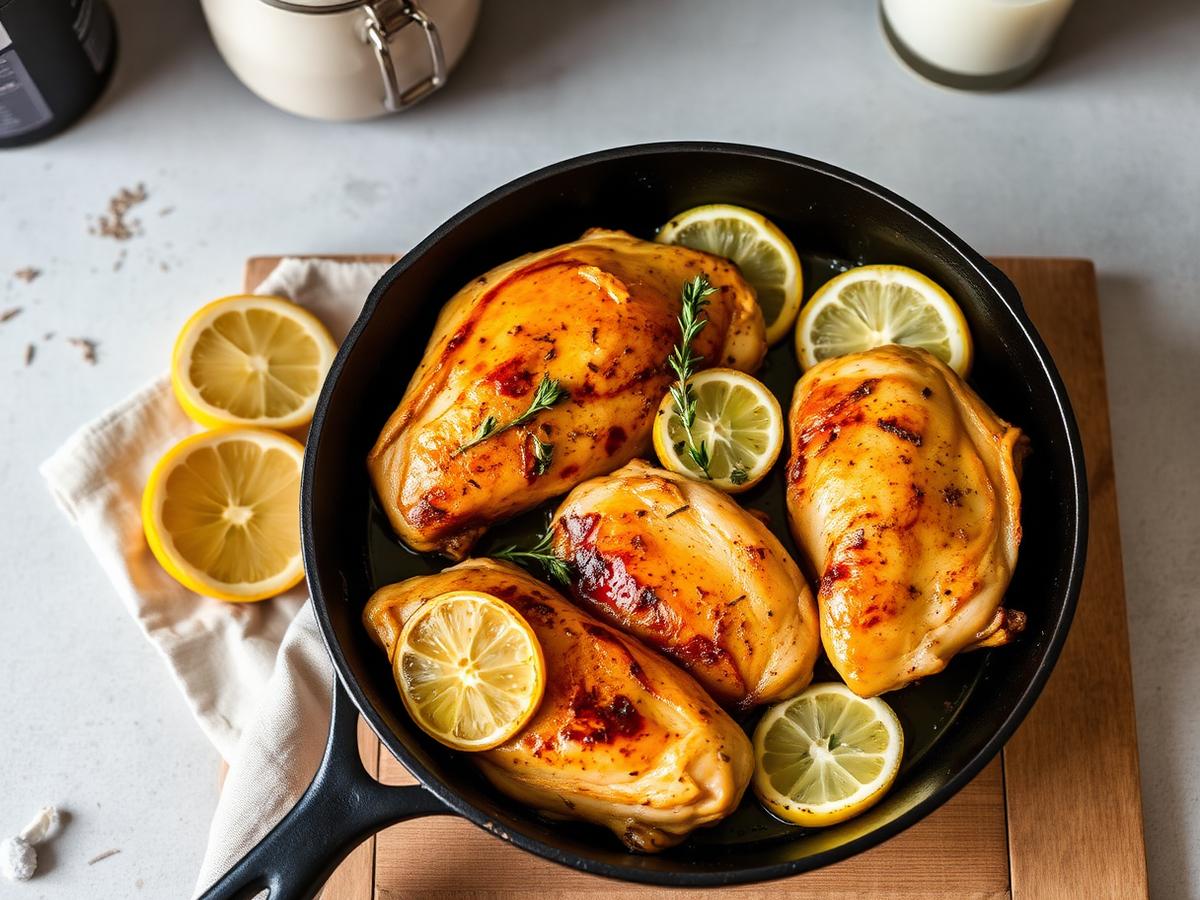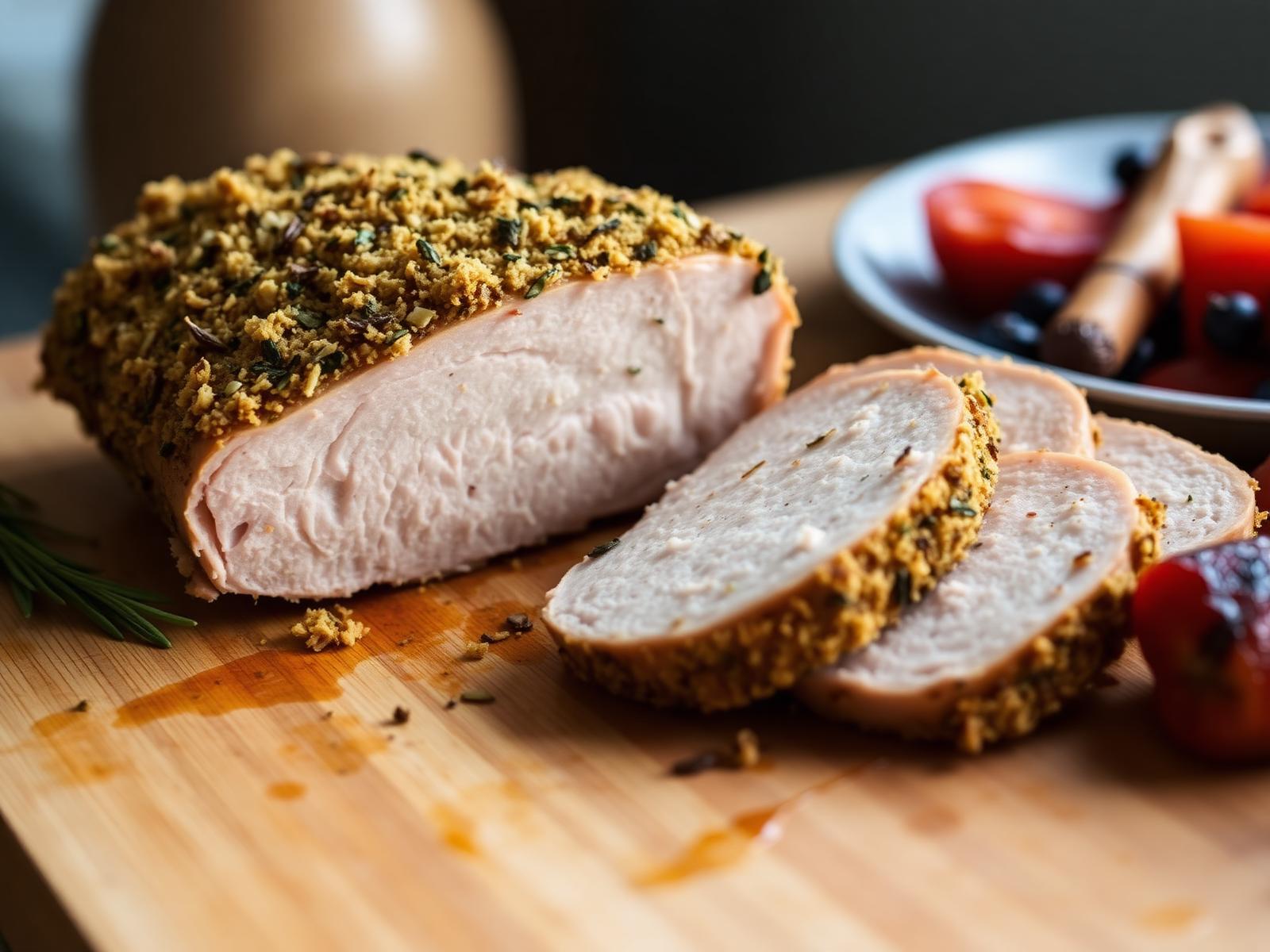
Pork tenderloin is, in my opinion, one of the most underrated proteins in the home kitchen. It is naturally lean and tender, it cooks in well under 30 minutes, and it absorbs the flavors of whatever crust or marinade you build around it. It is also forgiving in a way that more expensive cuts are not — you can serve it sliced for a dinner party or shredded over greens for an easy lunch the next day.
This herb-crusted version is the recipe I turn to when I want dinner to feel a little special without doing anything truly demanding. The pork is brushed with a thin layer of Dijon mustard, which acts as glue and adds a quiet tang, then rolled in a mixture of breadcrumbs, fresh rosemary, fresh thyme, garlic, lemon zest, and Parmesan. A quick sear locks in the moisture, and a short roast brings the inside to that just-blushing pink that means perfectly cooked.
I learned the trick of searing then roasting from a chef I worked with in college who insisted that the best meat begins with a hot pan and ends with gentle heat. Twenty years later, I still cook tenderloin the same way. Reverse it and you get pale, sad meat. Do it in this order and you get a deep golden crust around a juicy interior every single time.
Why you'll love it
- 30 minutes start to finish — including resting
- Juicy interior, fragrant herb crust, restaurant presentation
- Affordable cut that feeds four people generously
- Leftovers make excellent sandwiches and salads
"Pork tenderloin is, in my opinion, one of the most underrated proteins in the home kitchen."
Ingredients
Serves 4
For the pork
- 2 pork tenderloins (about 1 1/4 lb each), silver skin removed
- 1 1/2 tsp kosher salt
- 1/2 tsp freshly ground black pepper
- 2 tbsp Dijon mustard
- 2 tbsp olive oil
For the herb crust
- 1 cup panko breadcrumbs
- 3 tbsp finely grated Parmesan cheese
- 2 tbsp fresh rosemary, finely chopped
- 2 tbsp fresh thyme leaves
- 4 cloves garlic, finely grated
- Zest of 1 lemon
- 1 tbsp olive oil
- 1/2 tsp kosher salt
Instructions
6 steps · 40 min total
- 01
Preheat and prep
Heat your oven to 425°F (220°C) and line a rimmed sheet pan with parchment. Pat the pork tenderloins very dry with paper towels — moisture is the enemy of a good sear. Season all sides generously with salt and pepper, then let them sit at room temperature while you make the crust.
- 02
Mix the crust
In a wide shallow bowl, combine the panko, Parmesan, rosemary, thyme, garlic, lemon zest, olive oil, and salt. Mix with your fingers until the breadcrumbs are evenly damp and the herbs are distributed throughout. The mixture should hold together when you squeeze a small handful.
- 03
Sear the pork
Warm 2 tablespoons of olive oil in a large oven-safe skillet over medium-high heat until shimmering. Add the tenderloins and sear, turning every 2 minutes, until all sides are deeply golden — about 8 minutes total. Transfer to a plate to cool just slightly.
- 04
Apply the crust
Brush the Dijon mustard evenly over all sides of each tenderloin. Press the herb mixture firmly onto the mustard, rolling and pressing as needed until each loin is completely coated. The mustard is your glue — be generous but not gloppy.
- 05
Roast to temperature
Transfer the crusted tenderloins to the prepared sheet pan. Roast for 14 to 18 minutes, until an instant-read thermometer inserted in the thickest part reads 140°F. The crust should be deeply golden and the kitchen should smell incredible.
- 06
Rest and slice
Transfer the tenderloins to a cutting board and tent loosely with foil. Rest for at least 8 minutes — this is non-negotiable. Slice into 1/2-inch thick medallions against the grain and arrange on a platter. The center should be pale pink and juicy.
Chef's tips
Small details that change the outcome
Remove the silver skin before cooking. It is the silvery membrane along the top of the tenderloin — slide a sharp knife just underneath and pull it off in strips. It does not break down with cooking and turns chewy if left on.
Use an instant-read thermometer. Pork tenderloin overcooks in 90 seconds. The USDA recommends 145°F, but I pull at 140°F because it climbs another 5 degrees during resting.
Resting matters. Slicing too soon spills the juices onto your cutting board instead of staying inside the meat. Set a timer.
Fresh herbs make this. Dried rosemary and thyme work in a pinch (use 1/3 the volume), but the crust loses its bright, garden-fresh quality.
Storage & reheating
Refrigerate sliced pork in an airtight container for up to 4 days. The crust softens after the first day, which is fine — leftovers shine in sandwiches with a smear of Dijon and crisp greens, or chopped into a grain bowl. Avoid the microwave; reheat gently in a 300°F oven covered with foil to keep the pork from drying out.
Frequently asked
Answers to the most common questions
Can I make this gluten-free?+
Yes — swap the panko for gluten-free breadcrumbs or finely crushed gluten-free crackers. Almond meal also works and adds a nice nutty depth.
Can I prep the crust ahead?+
Yes — mix the crust up to 24 hours ahead and refrigerate. The rosemary and thyme will infuse the breadcrumbs even more. You can also sear and crust the pork an hour ahead, then roast just before serving.
What should I serve with this?+
Mashed or smashed potatoes, roasted root vegetables, a simple green salad with shallot vinaigrette, or buttered noodles. The herb crust pairs beautifully with anything bright and acidic alongside.
What is the difference between pork tenderloin and pork loin?+
Pork tenderloin is a small, slender muscle that cooks in 20 minutes — what we use here. Pork loin is a much larger roast that needs over an hour. They are not interchangeable in this recipe.

Written by
GreenFork Kitchen
Tested in a real home kitchen — three times before publishing, every time.